1. Selelekela
This manual provides detailed instructions for the MARATHON CL030068 Atomic Wall Clock. This clock is designed to automatically synchronize with the NIST radio signal for precise timekeeping, and it displays time, date, day of the week, and indoor temperature.

Image 1.1: The MARATHON CL030068 Atomic Wall Clock, showcasing its large digital display and sleek design.
2. Likahare tsa Sephutheloana
- MARATHON CL030068 Atomic Wall Clock
- AA Alkaline Batteries (included)
- Bukana ea mosebelisi (tokomane ena)
3. Seta
3.1 Ho kenya Betri
- Sheba sebaka sa betri ka morao ho oache.
- Insert the included AA batteries, ensuring correct polarity (+ and -).
- Koala sekoaelo sa karolo ea betri.
3.2 Initial Synchronization and Time Zone Selection
Upon battery insertion, the clock will automatically begin searching for the NIST atomic time signal. This process may take several minutes to several hours, depending on your location and signal strength. The atomic time signal is broadcast from Colorado, USA, and is primarily effective in North America.
- Sebaka sa Nako: Locate the time zone switch or button on the back of the clock. Select your appropriate North American time zone: Pacific, Mountain, Central, Eastern, Atlantic, Newfoundland, Alaska, or Hawaii.
- Kamohelo ea Letšoao: For optimal signal reception, place the clock near a window, away from electronic devices that may cause interference. The signal is often strongest during nighttime hours.

Image 3.1: The atomic wall clock mounted on a wall, demonstrating its suitability for various environments.
4. Litaelo tsa Ts'ebetso
4.1 Mekhoa ea ho bontša
The clock offers multiple display modes. Use the 'MODE' button (if available) or refer to specific buttons on the back of your clock to cycle through the following displays:
- Pontšo ea Nako: Choose between AM/PM or 24-hour format.
- Hlahisa Letsatsi: Shows the month, weekday, and date.
- Pontšo ea Mocheso: Displays the indoor room temperature in Celsius or Fahrenheit. Use the ‘C/F’ button to switch between units.
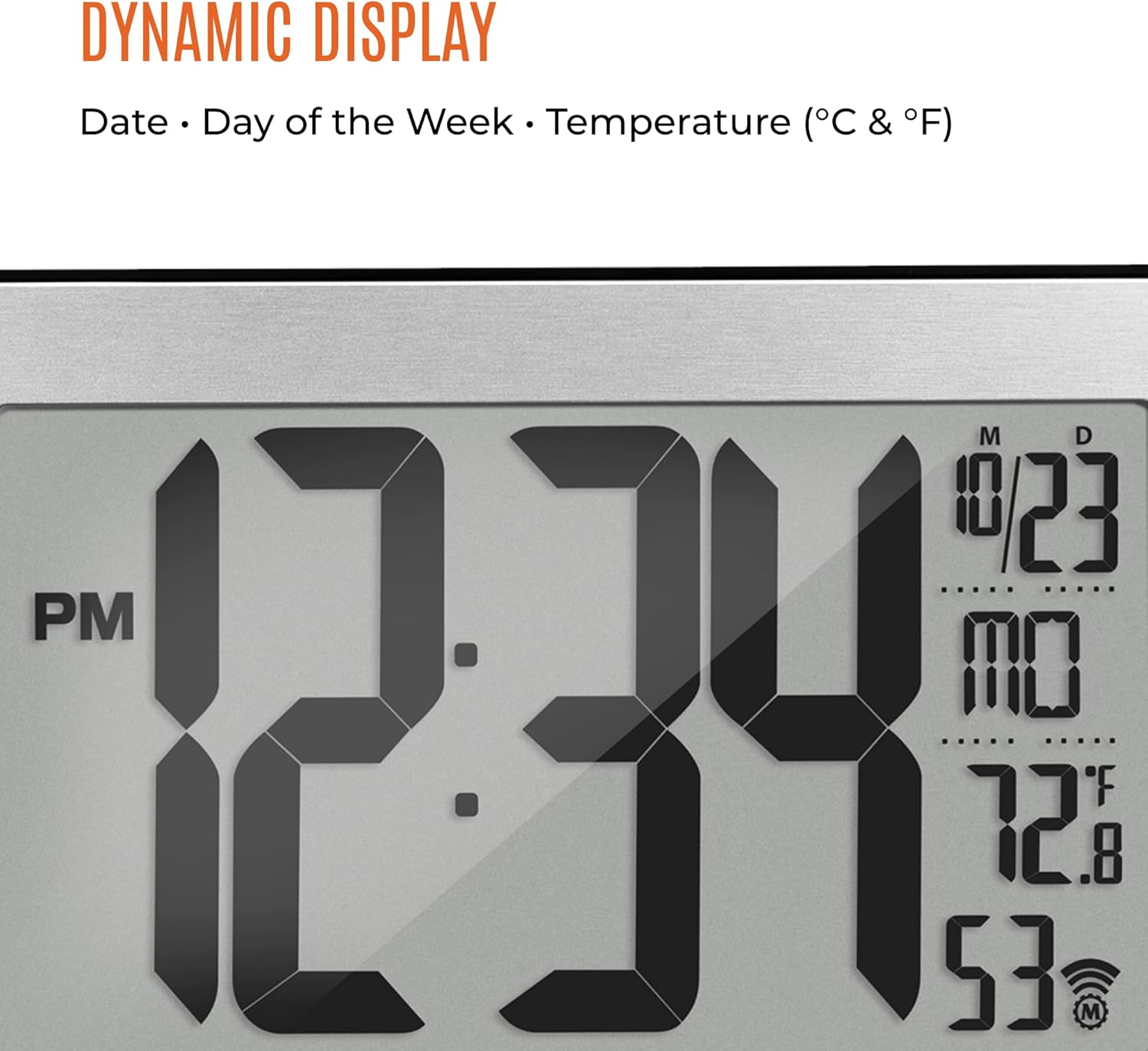
Setšoantšo sa 4.1: E haufi-ufi view of the clock's dynamic display, showing time, date, day, and temperature.
4.2 Palo ea Nako ea Buka
In the event that the atomic signal cannot be received, or if you wish to set the time manually, follow these steps:
- Press and hold the 'SET' button (or similar) until the time display begins to flash.
- Use the '+' or '-' buttons to adjust the hour, then press 'SET' to confirm.
- Pheta metsotso, selemo, khoeli le letsatsi.
- Press 'SET' one last time to exit manual setting mode.
5. Features Overview
- Self-Setting and Self-Adjusting: Automatically synchronizes with the NIST atomic clock signal for accurate time, including Daylight Saving Time adjustments.
- Pontšo e kholo: Features a 9-inch display with large 4-inch digits for easy readability from a distance.
- Mekhoa e Mengata ea Pontšo: Provides options for AM/PM or 24-hour time, full date (month, weekday, date), and indoor temperature in Celsius or Fahrenheit.
- Eight North American Time Zones: Supports Pacific, Mountain, Central, Eastern, Atlantic, Newfoundland, Alaska, and Hawaii standard times.
- Libaka tse Fapaneng: Designed for both wall mounting and tabletop use with a sturdy fold-out stand.
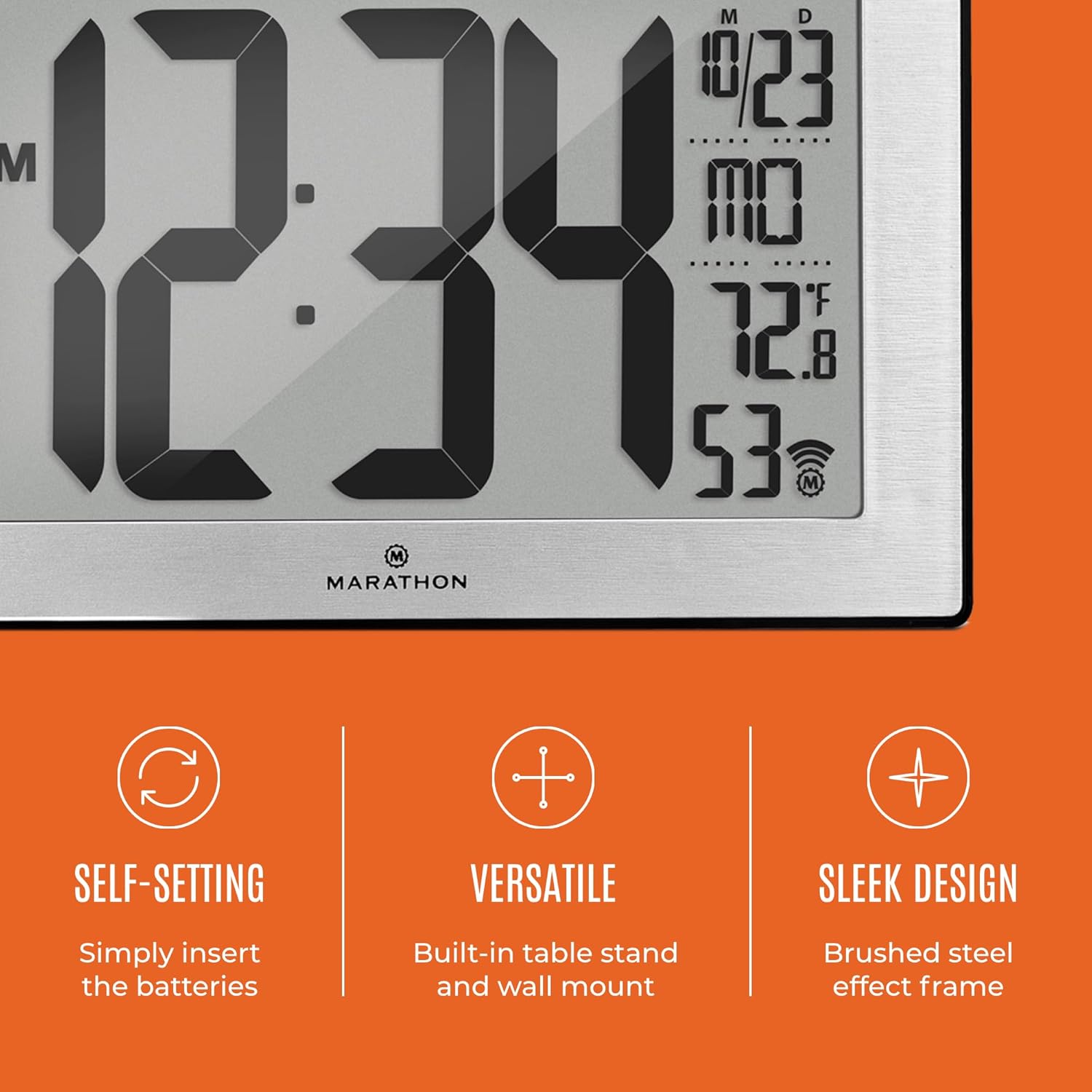
Image 5.1: Key features of the clock, including its self-setting capability, versatile placement options, and sleek design.
6. Mounting and Placement
6.1 Ho Hloma Lebota
The clock features a keyhole slot on the back for easy wall mounting. Ensure the wall is suitable for supporting the clock's weight (approximately 558g).
6.2 Ho beoa ha Letlapa
Utilize the integrated fold-out stand on the back of the clock to place it securely on any flat surface, such as a desk, shelf, or table.
6.3 Optimal Signal Reception
For best atomic signal reception, position the clock:
- Near a window.
- Away from large metal objects or electronic devices that may cause interference (e.g., televisions, computers, microwaves).
- In an area with minimal structural obstructions.

Image 6.1: The clock displayed in a home environment, illustrating its ease of placement and clear visibility.
7. Tlhokomelo
7.1 Phetoho ea Betri
When the display dims or becomes erratic, it is time to replace the batteries. Always replace all batteries at the same time with new, high-quality AA alkaline batteries. Do not mix old and new batteries or different types of batteries.
7.2 Ho hloekisa
To clean the clock, use a soft, dry cloth. Do not use abrasive cleaners, solvents, or chemical sprays, as these may damage the display or casing.
8. Ho rarolla mathata
| Bothata | Lebaka le ka khonehang | Tharollo |
|---|---|---|
| Clock does not display anything. | Libetri li shoele kapa li kentsoe hampe. | Check battery polarity. Replace with fresh AA batteries. |
| Clock does not synchronize with atomic signal. | Poor signal reception due to location or interference. | Move the clock to a different location, preferably near a window and away from electronics. Allow several hours, especially overnight, for synchronization. Manually set the time if necessary. |
| Nako e fosahetseng e bontšitsoe. | Incorrect time zone selected or atomic signal not received. | Verify the correct time zone is selected. Attempt to resynchronize or manually set the time. |
| Temperature reading is inaccurate. | Clock placed near a heat source or vent. | Fetisetsa oache sebakeng se nang le mocheso o tsitsitseng oa tikoloho. |
9. Litlhaloso
| Sebopeho | Lintlha |
|---|---|
| Nomoro ea Mohlala | CL030068 |
| Brand | MARATHON |
| Mofuta oa Pontšo | Dijithale |
| Mmala | Black Frame with Steel Inset |
| Litekanyo tsa Sehlahisoa | 24 x 3.81 x 16 cm (9.4 x 1.5 x 6.3 lisenthimithara) |
| Boima ba Ntho | 558 g (1.23 lbs) |
| Mohloli oa Matla | AA Batri (e kenyelelitsoe) |
| Likarolo Tse Khethehileng | Atomic Time Synchronization, Calendar Display, Temperature Display |
| Libaka tsa Nako | 8 North American Time Zones |

Image 9.1: Dimensions of the MARATHON CL030068 Atomic Wall Clock.
10. Tiisetso le Tšehetso
Bakeng sa tlhahisoleseding ea waranti le tšehetso ea bareki, ka kopo sheba ofisiri ea moetsi websebaka kapa ikopanye le lefapha la litšebeletso tsa bareki. Boloka rasiti ea hau ea theko e le bopaki ba hore u rekile.

Image 10.1: The MARATHON brand logo and a brief historical note about the company.


