1. Selelekela
This manual provides essential information for the safe and effective use of the Do it Best 709852 Bulk Polypropylene Rope. This rope is engineered for superior strength and durability, making it suitable for a variety of general-purpose applications.
The Do it Best 709852 rope is constructed from polypropylene, a material known for its ability to float, resistance to rot, and high abrasion resistance, contributing to a long service life. The inclusion of orange yarn within the rope aids in easy identification. It is particularly well-suited for tasks such as truck tie-downs and other heavy-duty shop applications.
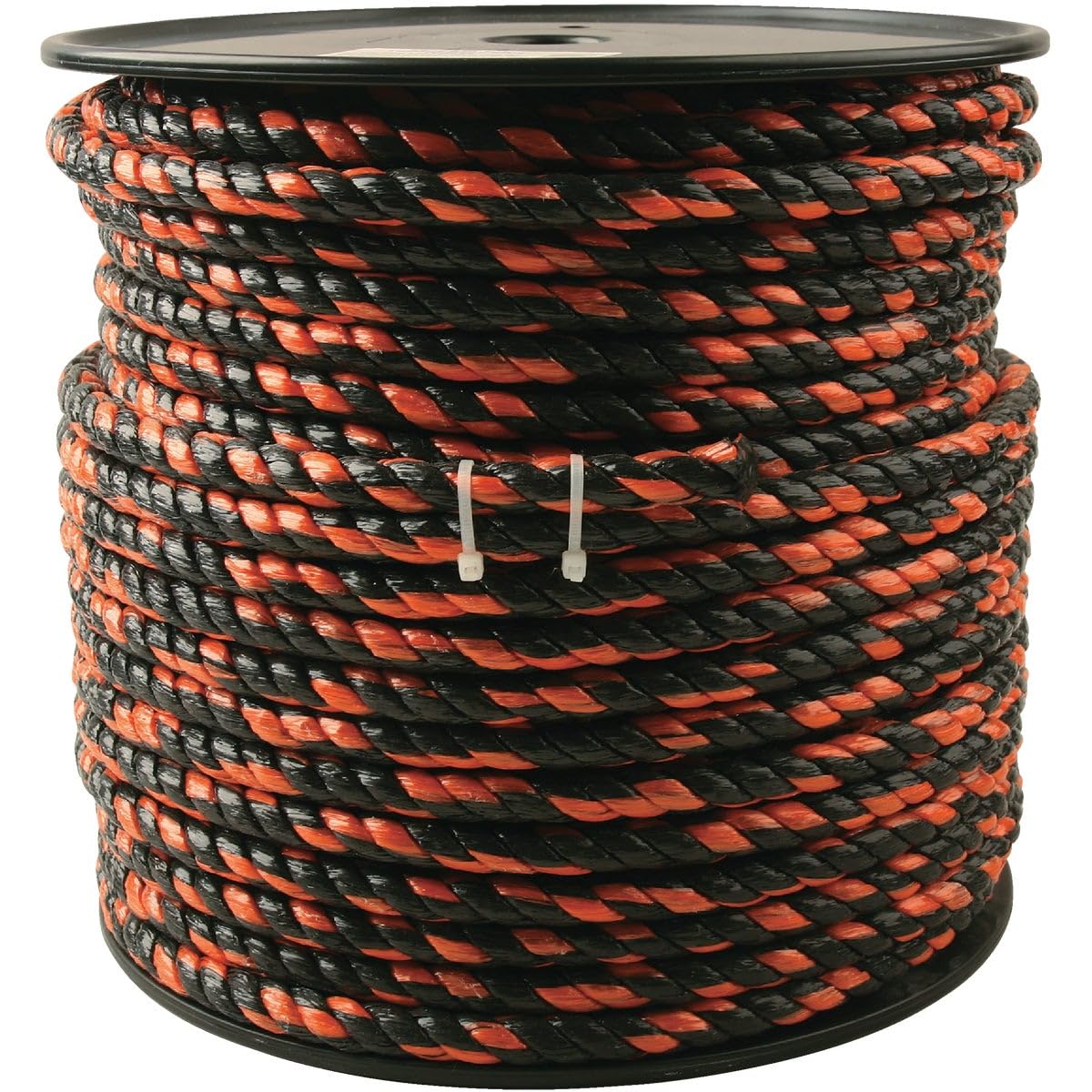
Image: A coil of Do it Best 709852 Bulk Polypropylene Rope, featuring its distinctive orange and black coloration. The rope is tightly wound, showcasing its robust construction.
2. Boitsebiso ba Tšireletseho
Always prioritize safety when handling and using rope. Failure to follow safety guidelines can result in injury or property damage.
- Hlahloba Pele U Sebelisa: Always inspect the entire length of the rope for cuts, abrasions, fraying, or other damage before each use. Do not use damaged rope.
- Understand Load Limits: While this rope offers superior strength, it is crucial to understand that all ropes have load limits. Do not exceed the safe working load limit for any application. This rope is not intended for critical overhead lifting or life-support applications unless specifically certified for such use.
- Proper Knot Tying: Learn and use appropriate knots for your specific application. Improper knots can significantly reduce the rope's strength and lead to failure.
- Qoba Maqhubu a Hare: Protect the rope from sharp edges, abrasive surfaces, and excessive friction, which can cause damage and weaken the rope. Use protective sleeves or padding where necessary.
- Tšusumetso ea Lik'hemik'hale: Avoid exposing the rope to harsh chemicals, solvents, or extreme temperatures, as these can degrade the material and compromise its integrity.
- Polokelo: Store rope properly to prevent damage and degradation (refer to Section 5: Maintenance).
3. Seta
Proper setup ensures the rope is ready for use and prevents tangling or damage.
- Ho phutholla: When uncoiling new rope, always pull from the center of the coil or from the outside in a manner that allows the rope to naturally unwind. Avoid pulling loops over the top of the coil, which can introduce twists and kinks.
- Tlhahlobo ea Pele: Perform a thorough visual inspection of the rope as you uncoil it to check for any manufacturing defects or shipping damage.
- Ho khaola (haeba ho hlokahala): If cutting the rope to a desired length, use a sharp knife or hot cutter. For polypropylene rope, it is highly recommended to heat-seal or tape the ends immediately after cutting to prevent fraying.
4. Ho sebetsa
The Do it Best 709852 Bulk Polypropylene Rope is versatile for various applications. Always ensure the rope is appropriate for the task at hand and used within its capabilities.
- Truck Tie-Downs: When securing loads, ensure the rope is routed to avoid sharp edges and is tensioned evenly. Use appropriate knots that will hold securely under vibration and movement, such as a trucker's hitch.
- General Utility: For tasks like bundling, securing tarps, or creating temporary barriers, ensure knots are tight and the rope is not subjected to excessive strain that could cause it to break or stretch beyond its elastic limit.
- Lisebelisoa tsa Marine: Due to its ability to float and resistance to rot, this rope is suitable for certain marine uses like mooring small boats, anchor lines (for light anchors), or general dock lines. Always consider environmental factors and specific load requirements.
- Avoid Shock Loading: Do not subject the rope to sudden, heavy loads (shock loading), as this can cause immediate failure or significantly reduce its lifespan.
5. Tlhokomelo
Proper maintenance extends the life of your rope and ensures its reliability.
- Ho hloekisa: If the rope becomes dirty, it can be cleaned with mild soap and water. Rinse thoroughly to remove all soap residue. Avoid using harsh detergents or bleach.
- Ho omisa: Allow the rope to air dry completely before storing. Do not expose it to direct heat sources, which can damage the polypropylene fibers.
- Polokelo: Store the rope in a cool, dry, and well-ventilated area, away from direct sunlight (UV radiation can degrade polypropylene over time) and chemicals. Coil or flake the rope neatly to prevent tangles and kinks.
- Tlhahlobo ea Kamehla: Continue to inspect the rope regularly for signs of wear, damage, or degradation, even during storage.
6. Ho rarolla mathata
Addressing common issues can help maintain the rope's performance.
- Fraying Ends: If rope ends begin to fray, re-cut the end cleanly and immediately heat-seal or tape it to prevent further unraveling.
- Kinks and Twists: Kinks and twists often occur from improper coiling or uncoiling. To remove them, lay the rope out straight and allow it to relax, or try reverse coiling.
- Reduced Strength: If the rope appears to have lost strength, exhibits excessive stretch, or shows significant wear (e.g., fuzzy appearance, flattened sections), it should be retired and replaced.
7. Litlhaloso
| Tšobotsi | Lintlha |
|---|---|
| Nomoro ea Mohlala | 709852 |
| Lintho tse bonahalang | Polypropylene |
| Mmala | Orange/Ntsho |
| Boima ba Ntho | Hoo e ka bang Liponto tse 23.03 |
| Litekanyo tsa Sehlahisoa | Hoo e ka bang 11.02 x 11.02 x 11.02 inches (e phuthetsoe) |
| Likarolo tsa Bohlokoa | Floats, Rot-Resistant, Abrasion-Resistant, Long Life |
8. Tiisetso
Do it Best products are manufactured to high standards. For specific warranty information regarding the 709852 Bulk Polypropylene Rope, please refer to the original purchase documentation or contact Do it Best customer service. General warranties typically cover manufacturing defects under normal use conditions.
9. Tšehetso
If you have questions, require assistance, or need further information regarding your Do it Best 709852 Bulk Polypropylene Rope, please contact Do it Best customer support. Contact details can typically be found on the product packaging or the official Do it Best websebaka.
For additional resources on rope care, knot tying, and safe usage practices, consider consulting reputable online guides or local hardware store experts.


