
1. Selelekela le Ho Fetaview
The JDIAG PB10 Automotive Circuit Tester is a multi-functional diagnostic tool designed to help users quickly and accurately identify and resolve electrical issues in vehicles. It supports a wide range of functions including voltage testing, polarity testing, component activation, continuity testing, grounding tests, diode detection, and short circuit tracing. This manual provides detailed instructions for safe and effective operation of your PB10 circuit tester.

Figure 1.1: JDIAG PB10 Automotive Circuit Tester with included cables and clamps.
2. Likarolo tsa Bohlokoa
- Multi-functionality: Performs Voltage Test, Polarity Test, Component Activation, Continuity Test, Grounding Test, Diode Detection, Test Trailer Lights & Connectors, Trace & Locate Short Circuits, Jumper Function, Quick Self-test, and Overload Protection.
- Vol. Voltage Range: Suitable for DC 8V to 32V automotive electrical systems, with voltage testing from 0V to 80V.
- Pontšo ea LED ea Dijithale: Provides clear and accurate voltage bala.
- Leseli la LED: Equipped with auxiliary LED lights for improved visibility in low-light conditions.
- Buzzer e Utloang: Provides audio feedback for various test results and overload alerts.
- Extended Test Line: Includes a 5-meter (16.41 ft) extended test line for comprehensive vehicle circuit system testing.
- Tšireletso e feteletseng: Internal circuit breaker automatically trips and issues a buzzer prompt if current exceeds 8A, protecting the device and user.

Setšoantšo sa 2.1: Ho fetaview of the JDIAG PB10's multi-function capabilities.
3. Se ka Lebokoseng
- JDIAG PB10 Automotive Probe Circuit Tester
- Battery Clip Cable (Red/Black)
- Mobu Clamp
- 5-meter (16.41 ft) Extended Test Line
- Bukana ea Mosebelisi
4. Seta
Before using the JDIAG PB10, ensure the vehicle's ignition is off. Connect the power clips to the vehicle's battery terminals. The red clip connects to the positive (+) terminal, and the black clip connects to the negative (-) terminal. The device will power on automatically once connected.

Figure 4.1: Key components of the JDIAG PB10 tester.
Video ea 4.1: Ho felileview of the JDIAG PB60 (similar to PB10) and its accessories, including setup for use. Note: This video features the PB60 model, but the setup process is similar for the PB10.
5. Litaelo tsa Ts'ebetso
5.1. Moqtage Teko
Ho leka voltage, simply touch the probe tip to the circuit point you wish to measure. The digital LED display will show the voltage reading. The PB10 can measure voltages from 0V to 80V DC.

Figure 5.1.1: Performing a voltage test on a vehicle's fuse box.
5.2. Polarity Test
When the probe detects a positive voltage, the red (+) LED indicator light will illuminate. When it detects a negative voltage, the green (-) LED indicator light will illuminate. This provides quick visual confirmation of circuit polarity.
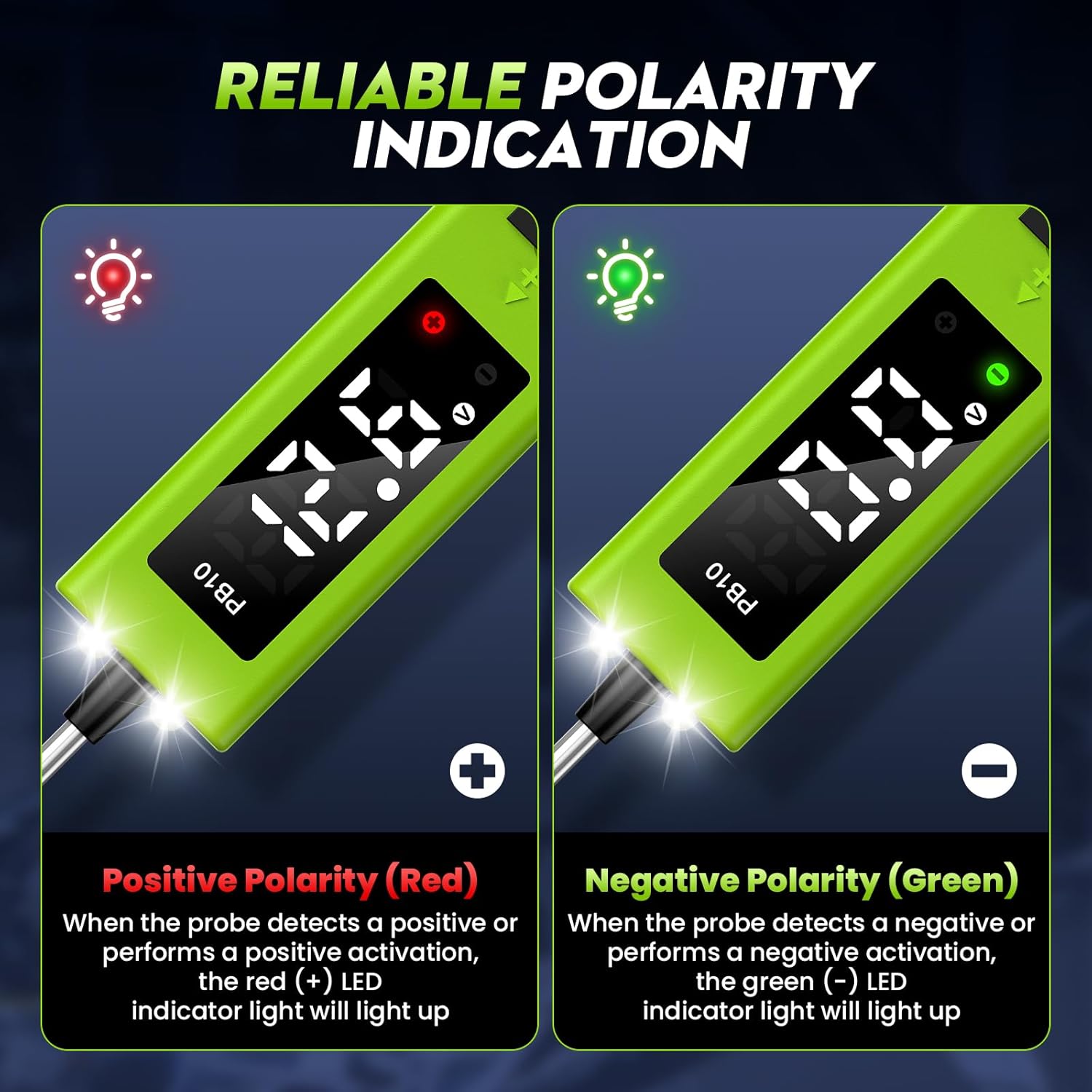
Figure 5.2.1: Visual indication of positive (red) and negative (green) polarity.
5.3. Ho kenya tshebetsong dikarolo
The PB10 can activate components by supplying positive or negative battery current to the probe tip. Push the power switch forward to supply positive current, or backward to supply negative current. This function is useful for testing components like starter fuel pumps, solenoid valves, blowers, cooling fans, and headlights.

Setšoantšo sa 5.3.1: Examples of components that can be activated using the PB10.
5.4. Teko ea Tsoelo-pele
To perform a continuity test, connect the ground clamp to a known good ground. Touch the probe tip to the circuit you want to test. If the circuit is continuous, the green indicator light will turn on and the buzzer will sound. This helps identify open circuits.

Figure 5.4.1: Demonstrating a continuity test with the PB10.
5.5. Grounding Test
The PB10 supports grounding tests to check for bad grounds or power supply failures. Connect the main power clips to the battery. Touch the probe tip to the component or wire you suspect has a bad ground. If a good ground is detected, the green indicator light will illuminate and the buzzer will sound.
5.6. Diode Detection
The device can detect diodes. When testing a diode, the display will show the voltage drop across the diode. This helps in diagnosing faulty diodes within a circuit.

Figure 5.6.1: Using the PB10 for diode detection.
5.7. Test Trailer Lights & Connectors
The extended test line and various functions of the PB10 make it ideal for testing trailer lights and their connectors. You can check for voltage, continuity, and proper grounding in the trailer's electrical system.
5.8. Trace & Locate Short Circuits
The PB10's high sensitivity probe assists in accurately and quickly troubleshooting faulty components and tracing short circuits. By following the circuit path and observing voltage readings and buzzer feedback, you can pinpoint the exact location of a short.

Figure 5.8.1: The PB10 indicating a shorted circuit.
5.9. Jumper Function
The PB10 can act as a jumper to bypass suspected faulty components or provide temporary power to a circuit. Exercise caution when using this function, as it may bypass existing circuit protection.
5.10. Quick Self-test
The device performs a quick self-test upon power-up to ensure proper functionality. This helps confirm the tester is ready for use.
5.11. Tšireletso e Felletseng
The PB10 features an internal overload protection device. If the current drawn through the probe exceeds 8A, the circuit breaker will automatically trip, and the buzzer will sound, protecting the device and preventing damage to the vehicle's electrical system. To reset, remove the probe from the circuit and press the power switch to its neutral position.

Figure 5.11.1: The PB10's built-in overload protection.
Video 5.11.2: Demonstration of the JDIAG PB10's various testing capabilities, including voltage and continuity tests.
6. Tlhokomelo
- Ho hloekisa: After each use, wipe the probe tip and device body with a clean, dry cloth. Avoid using abrasive cleaners or solvents.
- Polokelo: Store the PB10 in a dry, cool place away from direct sunlight and extreme temperatures. Keep it in its original packaging or a protective case to prevent damage.
- Probe Tip Replacement: The probe tip is designed to be durable, but if it becomes damaged or worn, it can be replaced. Refer to the user manual for specific replacement instructions.
- Tlhokomelo ea Lithapo: Avoid kinking or sharply bending the cables. Store them neatly to prevent tangles and damage.

Figure 6.1: The PB10 features a replaceable button for easy maintenance.
7. Ho rarolla mathata
- Sesebediswa Ha se Matla:
- Ensure the battery clips are securely connected to the correct positive (+) and negative (-) terminals of the vehicle battery.
- Verify the vehicle battery has sufficient charge (8V-32V DC).
- E sa nepahalang Moqtage Ho bala:
- Check for clean connections at the battery terminals and the probe tip.
- Ensure the probe tip is making good contact with the circuit being tested.
- Compare readings with a known accurate multimeter if available. Note that minor discrepancies (e.g., 0.2V-0.3V) may occur due to cable resistance, which is generally acceptable for automotive testing.
- Overload Protection Tripping Frequently:
- This indicates a short circuit or excessive current draw. Disconnect the device immediately.
- Inspect the circuit for shorts or components drawing more than 8A.
- Ensure you are not accidentally touching the probe tip to a negative pole while in activation mode, as this will trigger overcurrent protection.
- No Buzzer Sound:
- Check if the buzzer is obstructed or damaged.
- Ensure the test conditions (e.g., continuity) are met for the buzzer to activate.
8. Litlhaloso
| Tlhaloso | Boleng |
|---|---|
| Keletso Voltage | 8V-32V DC |
| Moqtage Range | 0-80V DC |
| Mosebetsi oa Hona Joale | 80mA |
| Ketso ea hona joale | 0-8A |
| Mocheso oa ho sebetsa | 0°C-60°C (32°F-140°F) |
| Mocheso oa polokelo | -40 ° C -70 ° C (-40 ° F-158 ° F) |
| Litekanyo tsa Sehlahisoa | 9.06 x 0.94 x 1.18 lisenthimithara |
| Boima ba Ntho | 7.09 ounces (201 Grams) |
| Bolelele ba Cable | Limithara tse 5 (16.41 ft) |
9. Warranty & Ts'ehetso
JDIAG is committed to providing high-quality automotive tools. For any product inquiries, technical support, or warranty claims, please contact JDIAG customer service through the Amazon platform or visit the official JDIAG store. Keep your purchase receipt as proof of purchase for warranty purposes.
Bakeng sa tlhaiso-leseling e batsi le tšehetso, etela ho JDIAG Store on Amazon.