
Selelekela
The Progress EK2783P Electric Egg Cooker is designed to simplify the process of cooking eggs to your preferred consistency, whether soft, medium, or hard-boiled, or poached. This 430W appliance can cook up to 6 eggs at once and includes accessories for versatile egg preparation. Please read this manual thoroughly before first use and retain it for future reference.
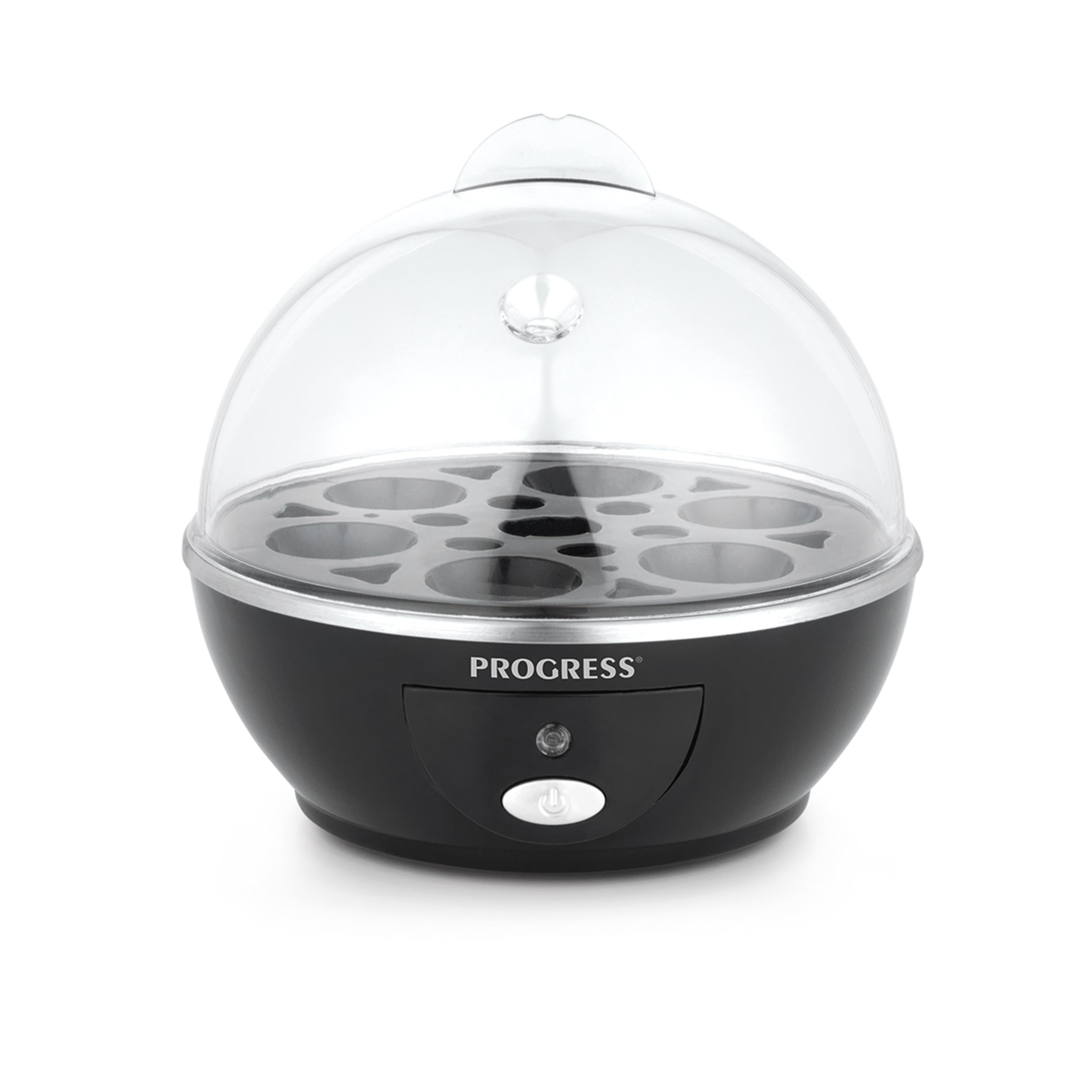
Image: The Progress EK2783P Electric Egg Cooker shown with various cooked eggs and toast, demonstrating its versatility.
Litaelo tsa Bohlokoa tsa Tšireletso
Ha ho sebediswa disebediswa tsa motlakase, mehato ya motheo ya tshireletso e lokela ho latelwa kamehla ho fokotsa kotsi ya mollo, ho tshoha ha motlakase le ho lemala ha batho. Tsena di kenyeletsa:
- Bala litaelo tsohle ka hloko pele u sebelisa sesebelisoa.
- Do not immerse the base unit, power cord, or plug in water or any other liquid.
- Sesebelisoa sena ha sea rereloa ho sebelisoa ke batho (ho kenyeletsoa bana) ba nang le matla a fokotsehileng a 'mele, kutlo kapa kelello, kapa ba hlokang boiphihlelo le tsebo, ntle le haeba ba filoe tlhokomelo kapa taelo mabapi le tšebeliso ea sesebelisoa ke motho ea ikarabellang bakeng sa polokeho ea bona.
- Always unplug the appliance from the power outlet when not in use and before cleaning. Allow to cool before putting on or taking off parts, and before cleaning the appliance.
- Se ke oa sebelisa sesebelisoa leha e le sefe ka thapo kapa plug e senyehileng, kapa ka mor'a hore sesebelisoa se sebetse hantle kapa se senyehile ka mokhoa ofe kapa ofe.
- Use the appliance on a stable, heat-resistant surface.
- E-ba hlokolosi haholo ha u tsamaisa sesebelisoa se nang le oli e chesang kapa maro a mang a chesang.
- Avoid contact with hot surfaces. Use handles or knobs. Hot steam is released during operation; keep hands and face clear.
- Se ke oa sebelisa sesebelisoa bakeng sa eng kapa eng ntle le ts'ebeliso ea sona.
Lisebelisoa tsa Sehlahisoa
Familiarize yourself with the parts of your Progress EK2783P Electric Egg Cooker:
- Yuniti ea Motheo: Contains the heating plate and power switch.
- Letlapa la ho futhumatsa: Where water is added for steaming.
- Lehe la Lehe: Holds up to 6 eggs for boiling.
- Poaching Trays (2): For poaching individual eggs.
- Sekoaelo se Bonahalang: Covers the cooking area, allowing steam to build.
- Measuring Cup with Egg Piercer: Used to measure water and pierce eggs.

Image: All components of the egg cooker laid out, including the base, lid, egg tray, poaching trays, and measuring cup.
Seta le Tšebeliso ea Pele
- Hlakola: Tlosa ka hloko likarolo tsohle tsa sephutheloana.
- Hloekisa: Before first use, wash the egg tray, poaching trays, transparent lid, and measuring cup in warm, soapy water. Rinse thoroughly and dry. Wipe the heating plate and exterior of the base unit with a damp lesela. U se ke ua qoelisa setsi sa motheo ka metsing.
- Sebaka: Place the egg cooker on a stable, flat, and heat-resistant surface, away from walls or cabinets to allow for steam ventilation.
Litaelo tsa Ts'ebetso
A. Boiling Eggs (Soft, Medium, Hard)
- Kenya Metsi: Use the provided measuring cup to add the desired amount of water to the heating plate. The measuring cup has markings for soft, medium, and hard-boiled eggs, corresponding to the number of eggs (1-7).
- Pierce Eggs: Using the egg piercer located at the bottom of the measuring cup, gently pierce the larger end of each egg. This prevents cracking during cooking.
- Place Eggs: Place the egg tray onto the base unit. Arrange the pierced eggs on the egg tray with the pierced end facing upwards. The cooker can hold up to 6 eggs.
- Sekoahelo: Place the transparent lid over the egg tray and base unit.
- Pheha: Plug the appliance into a suitable power outlet. Press the power switch to turn on the egg cooker. The indicator light will illuminate.
- Ho Koala ka Motlakase: The egg cooker will automatically turn off when all the water has evaporated, and the indicator light will switch off.
- Sebeletsa: Carefully remove the lid (beware of hot steam) and the egg tray. Rinse the eggs under cold water to stop the cooking process and make them easier to peel.

Image: Raw eggs positioned in the egg tray of the cooker, ready for boiling.

Image: Close-up of the measuring cup, showing the water level markings for different egg consistencies and the integrated egg piercer.
B. Poaching Eggs
- Kenya Metsi: Add approximately 60ml of water to the heating plate using the measuring cup.
- Prepare Poaching Trays: Lightly grease the inside of the two poaching trays with a small amount of butter or cooking oil to prevent sticking.
- Break Eggs: Carefully break one egg into each poaching tray.
- Place Trays: Place the poaching trays onto the egg tray, then place the assembled egg tray onto the base unit.
- Sekoahelo: Place the transparent lid over the unit.
- Pheha: Plug in the appliance and press the power switch. The indicator light will turn on.
- Ho Koala ka Motlakase: The cooker will automatically turn off when the water has evaporated.
- Sebeletsa: Carefully remove the lid and then the poaching trays (use oven mitts or a cloth as they will be hot). Gently slide the poached eggs onto your plate.

Image: Freshly poached eggs served on toast, prepared with the egg cooker.

Image: A hand carefully lifting a poaching tray with a perfectly cooked poached egg from the appliance.
Tlhoekiso le Tlhokomelo
Regular cleaning ensures optimal performance and extends the life of your egg cooker.
- Tlosa 'me u Pholise: Ka linako tsohle u ntše polaka sesebelisoa sa motlakase 'me u se lumelle hore se phole ka ho feletseng pele se hloekisa.
- Hlatsoa Likarolo Tse Nkoang: The egg tray, poaching trays, transparent lid, and measuring cup can be washed in warm, soapy water. Rinse thoroughly and dry completely. These parts are generally not dishwasher safe unless specified otherwise in product packaging.
- Setsi sa Motheo se Hloekileng: Wipe the heating plate and the exterior of the base unit with a soft, damp cloth. Do not use abrasive cleaners, scouring pads, or harsh chemicals, as these can damage the surfaces.
- E nyatsa: Over time, mineral deposits may accumulate on the heating plate. To descale, add a mixture of water and white vinegar (1:1 ratio) to the heating plate and let it sit for 15-30 minutes. Gently scrub with a non-abrasive sponge if necessary, then rinse and wipe clean. Do not turn on the appliance with the vinegar solution.
- Polokelo: Boloka sesebelisoa se hloekileng le se omileng sebakeng se phodileng, se omileng.

Image: A person cleaning the removable egg tray under running water with a sponge.
Ho batle phoso
| Bothata | Lebaka le ka khonehang | Tharollo |
|---|---|---|
| Sesebelisoa ha se bulele. | Ha ho phepelo ea motlakase. | Check if the appliance is properly plugged into a working power outlet. Ensure the power switch is pressed. |
| Eggs are not cooked to desired consistency (too soft/too hard). | Incorrect water level. | Refer to the measuring cup markings and adjust the water amount for your desired egg consistency. Less water for softer, more water for harder. |
| Eggs crack during cooking. | Eggs not pierced or pierced incorrectly. | Always pierce the larger end of each egg with the provided egg piercer before cooking. |
| Masalla a masoeu poleiting e futhumatsang. | Mineral deposits from water. | Descale the heating plate as described in the Cleaning and Maintenance section. |
Litlhaloso
- Lebitso: TSOELO-PELE
- Nomoro ea Mohlala: EK2783P
- Matla: 430W
- Litekanyo (L x W x H): 15.7 x 15.7 x 15.1 cm,
- Boima ba 'mele: 730 g
- Bokhoni: Ho fihlela mahe a 6
- Ho Koala ka Motlakase: Ee
Warranty le Tšehetso
This product comes with a standard manufacturer's warranty. For specific warranty details, please refer to the warranty card included with your purchase or contact the retailer. If you encounter any issues or require technical support, please contact Progress customer service through their official websebaka sa marang-rang kapa tlhaiso-leseling e fanoeng ka har'a sephutheloana sa sehlahisoa sa hau.